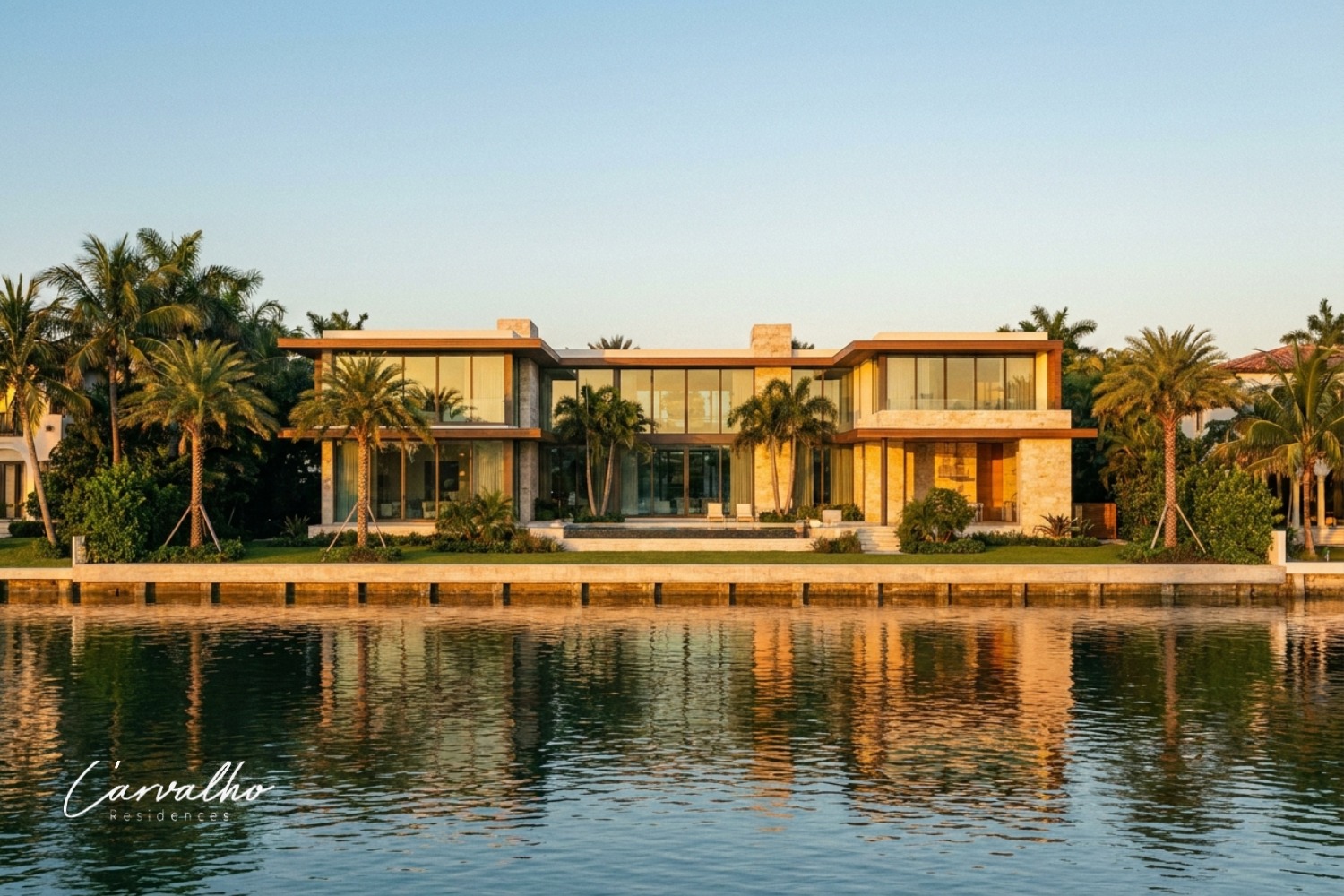
Here's a number that should stop any Miami Beach owner mid-scroll: homes here are currently closing somewhere around 7% to 9% below asking price, and the typical listing takes roughly three to five months to go under contract. If you've been reading that Florida is soft and assuming that discount is just what the market pays now — I want to push back on that. Most of that gap isn't the market. It's a pricing decision that was made on day one and then defended for ninety days.
Because at the same time those discounts are showing up, Miami Beach's median sale price is up about 3.7% year over year, and Miami-Dade single-family prices are up roughly 3%. Those two facts only coexist for one reason: a meaningful share of listings are being launched at a number the market was never going to pay, and the discount is the market slowly walking them back to reality.
Let's take that apart, because if you're thinking about selling in the next six months, this is the whole game.
Miami Beach isn't one market. Pricing it like one is the expensive mistake.
The single most costly error I see right now is an owner pricing off the wrong half of the market. Miami-Dade has split into two genuinely different markets, and they are moving in opposite directions.
Months of supply — Single-family: about 4.9 months, a seller's market. Existing condo: about 12–13 months, a buyer's market.
Median days to contract — Single-family: about 52 days, up from 42 a year ago. Existing condo: about 85 days, up from 68.
Price direction — Single-family: up around 3%. Existing condo: down, with a median around $415K that briefly dipped under $400K.
Read those numbers again. A Miami-Dade single-family seller is operating in a legitimate seller's market with under five months of supply. A condo seller is operating in a market with more than a year of standing inventory — a level we hadn't seen since 2019, after resale condo supply peaked near seventeen months in the first quarter of this year.
Same county. Same buyers, mostly. Completely different negotiating position. And when a condo owner prices off the neighborhood narrative — "houses on my street are up, values are fine" — that listing is starting its life about 8% too high and doesn't know it yet.
💡 The test I'd run before you pick a number: ignore active listings entirely. Actives tell you what other sellers hope for; a market with twelve months of supply is, by definition, full of hopeful numbers that aren't working. Price off closed sales in the last 90 days in your building or your immediate blocks — and then look at what those sellers originally asked. That spread, not the list prices, is your real market.
What days on market actually costs you here
In Miami Beach, depending on which data set you read, the typical property goes under contract somewhere between roughly 99 and 155 days. That's a long runway, and long runways create a specific, predictable failure pattern:
Weeks 1–3: maximum attention. Every buyer already working with an agent in your price band sees your listing. This is the only period where you have a genuine backlog of ready buyers looking at your property for the first time.
Weeks 4–8: you're now only reaching new buyers entering the market. The pool shrinks dramatically. Showings thin out.
Weeks 9+: the days-on-market count itself becomes information. Buyers read a 90-day listing as "something's wrong with it or the seller," and they price their offer accordingly — which is exactly how you end up negotiating 9% off instead of 3%.
Roughly 17% of listings county-wide have taken a price cut. That sounds like a healthy correction, and in aggregate it is. But watch how those cuts usually happen: $50K off at day 45, another $50K at day 90, another at day 130. Each cut chases the market down instead of getting ahead of it, and each one arrives after the audience that would have paid the higher number has already moved on. The seller ends up at a price they could have had in week two — minus four extra months of taxes, insurance, HOA, and mortgage interest.
That carrying cost is not trivial in Miami Beach. On a $1.5M property, four extra months of holding costs plus a chased-down price can easily be a six-figure swing versus pricing correctly at launch.
The listing mistakes that actually cost money
1. "Let's list high — we can always come down."
This is the most common and the most expensive. It's built on the idea that pricing is reversible. It isn't, really: you get one launch, and a stale listing carries a discount that a fresh listing doesn't. In a 12-month-supply segment, list-high-negotiate-later is how a 3% negotiation turns into a 9% one.
2. Pricing a condo without pricing the building
Post-Surfside, sophisticated Miami buyers underwrite the association before they underwrite the unit. A pending special assessment, a thin reserve, an open milestone item — buyers will discover all of it, and when they discover it in week six of due diligence instead of in your listing materials, it becomes a renegotiation instead of a disclosure. If your building has a known issue, price it in openly and control the narrative. If your building is clean — funded reserves, completed milestone inspection, no assessment on the horizon — that is a genuine, provable premium in this market and most competing listings can't claim it. Lead with it.
3. Withdrawing and relisting to "reset the clock"
Buyers' agents pull full listing history in about ten seconds. A relist with a reset day count and a lower price reads as exactly what it is, and it usually invites a lower offer, not a higher one.
4. Underinvesting in how the property is presented
With this much inventory, buyers are triaging online before they ever ask for a showing. In a market where a comparable unit two floors up is competing on the same search results page, presentation is not vanity — it's your only differentiator at the click-through stage.
5. Pricing at a search-band edge
A listing at $1,525,000 misses every buyer whose filter tops out at $1.5M. In a slow market you cannot afford to be invisible to a whole segment of your own audience over $25,000. Price to sit inside the band, not just above it.
So is this a bad time to sell in Miami Beach?
Not in the way people mean when they ask it. Here's my honest read:
If you own a single-family home: you're in a seller's market by any conventional definition. Under five months of supply, prices up, a buyer pool that still includes strong cash and relocation demand, and trophy waterfront — Surfside, South of Fifth, Bal Harbour, the islands — still printing firm-to-record numbers. The reason your neighbor's house sat for four months is almost never that no one wanted it. Price it right and this is a good market to sell into.
If you own a condo: the segment is soft, and waiting for it to firm up is a bet on a market with more than a year of standing inventory and an insurance-and-assessment overhang that isn't resolving quickly. Supply has come off its Q1 peak, which is encouraging — but "less bad" is not the same as "recovering." If you plan to sell in the next couple of years, I'd rather sell into this market accurately priced than into a market with another year of inventory added to it.
Timing within the year: Miami Beach demand is seasonal, and the window from roughly October through March is when the buyer pool is deepest — snowbirds, international buyers, and relocation traffic all thicken. Given that the typical listing needs three to five months to find its buyer, a listing that goes live in September or early October is positioned to be in front of the strongest buyer flow of the year while it's still fresh. That's the timing argument for moving now rather than in January.
What I'd actually do
If you're seriously considering selling, three things, in order.
First, get an honest number — not a flattering one. The valuation that makes you feel good in March is the one that costs you 9% in September. I'd rather tell you a number you don't love and be right than tell you a number you love and watch the market correct it for us over four months.
Second, front-load the diligence. Reserve study, milestone status, assessment history, permits, insurance. Have it assembled before you list. Every question a buyer has to discover is a question that becomes a price concession; every question you answer up front is a reason to trust your number.
Third, treat the first 21 days as the whole listing. Price, presentation, and exposure all have to be right on day one, because that's when your real buyer pool is looking. Everything after that is a slower, more expensive version of the same conversation.
The sellers getting hurt in Miami Beach right now aren't the ones selling in a bad market. They're the ones who priced for the market of two years ago and paid for the difference in time. The market will tell you your number either way — the only choice is whether it tells you in week two or in month five.
Curious what your Miami Beach property would actually sell for today? Send me the address and I'll run you a real number — closed comps from the last 90 days, what those sellers originally asked versus what they got, your segment's current supply and days-to-contract, and an honest read on where I'd price it and why. No pressure, no listing pitch.
👉 Message me on WhatsApp | 🏖️ Buying instead? Tell me what you're looking for and I'll show you where the negotiating room actually is right now | ✉️ silvana@carvalhoresidences.com
Frequently Asked Questions
How much below asking price are Miami Beach homes selling for in 2026?
Recent data puts Miami Beach closings at roughly 7% to 9% below the original list price, with about 17% of Miami-Dade listings having taken at least one price reduction. That discount is heavily influenced by how the property was priced at launch — listings priced accurately from day one typically negotiate a far smaller gap than listings that spend months chasing the market down.
How long does it take to sell a home in Miami Beach right now?
Depending on the data source and property type, Miami Beach listings are taking roughly 99 to 155 days to go under contract. County-wide, the median time from listing to contract is about 52 days for single-family homes (up from 42 a year earlier) and about 85 days for existing condos (up from 68). Condos are meaningfully slower than houses.
Is it a buyer's or seller's market in Miami Beach?
Both, depending on property type. Miami-Dade single-family inventory sits near 4.9 months of supply, which is conventionally a seller's market, and single-family prices are up around 3%. Existing condo inventory sits near 12–13 months of supply — a clear buyer's market — after peaking around 17 months in the first quarter of 2026, the highest level since 2019.
Should I wait for the Miami condo market to recover before selling?
That's a bet on a segment carrying more than a year of standing inventory plus ongoing insurance and assessment pressure. Supply has eased from its Q1 2026 peak, but easing is not the same as recovering. If a sale is likely within the next couple of years, selling into today's market at an accurate price generally beats adding another year of inventory to compete against. If you can genuinely hold long-term, that's a different calculation — worth talking through with your specific building and numbers.
What's the best time of year to list a Miami Beach property?
Miami Beach buyer traffic is deepest from roughly October through March, when seasonal, international, and relocation demand all peak. Because the typical listing needs three to five months to find a buyer, going live in September or early October puts a fresh listing in front of the strongest buyer flow of the year — rather than launching in January and reaching peak season already stale.
Does my condo association's financial condition affect my sale price?
Significantly. Miami buyers now underwrite the association alongside the unit — reserve funding, milestone inspection status, pending special assessments, and insurance history. Problems discovered during due diligence become price renegotiations; problems disclosed up front become priced-in expectations. A building with funded reserves, a completed milestone inspection, and no pending assessment is a documented premium in this market, and most competing listings can't prove the same.
Market conditions in Miami Beach are moving quickly and the single-family and condo segments are behaving very differently — if you're reading this later, reach out and I'll pull the current numbers for your specific building, block, or price band. 🔑
Sources: MIAMI REALTORS® monthly Miami-Dade market statistics (single-family ~4.9 months of supply vs. existing condo ~12.3–12.9 months; median time to contract 52 days single-family / 85 days condo, versus 42 / 68 a year earlier; condo median sale price ~$415,000, −2.4% year over year); Redfin Miami Beach and Miami market pages, July–August 2026 (Miami Beach sale-to-list roughly 7% below asking; time to pending in the 122–155-day range); Momentum Realty Miami Beach live MLS data as of August 10, 2026 (median sale price ~$775,000, +3.7% year over year; ~99 days to contract; ~9% negotiated off asking; ~17% of listings with a price cut). Figures vary by source and by how each defines the Miami Beach market area; treat them as directional and ask for a property-specific analysis before pricing. This is general market information, not legal, tax, or investment advice.