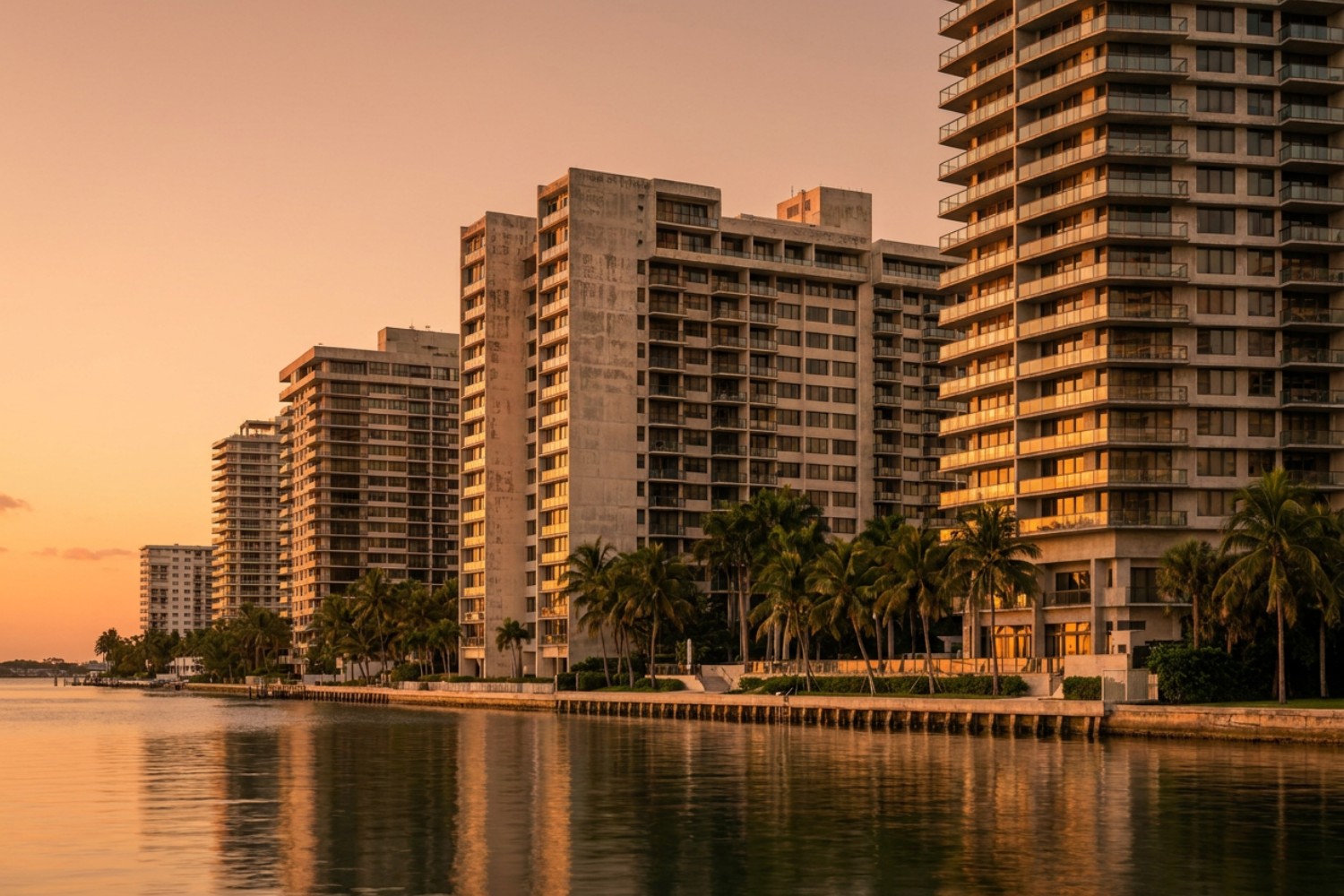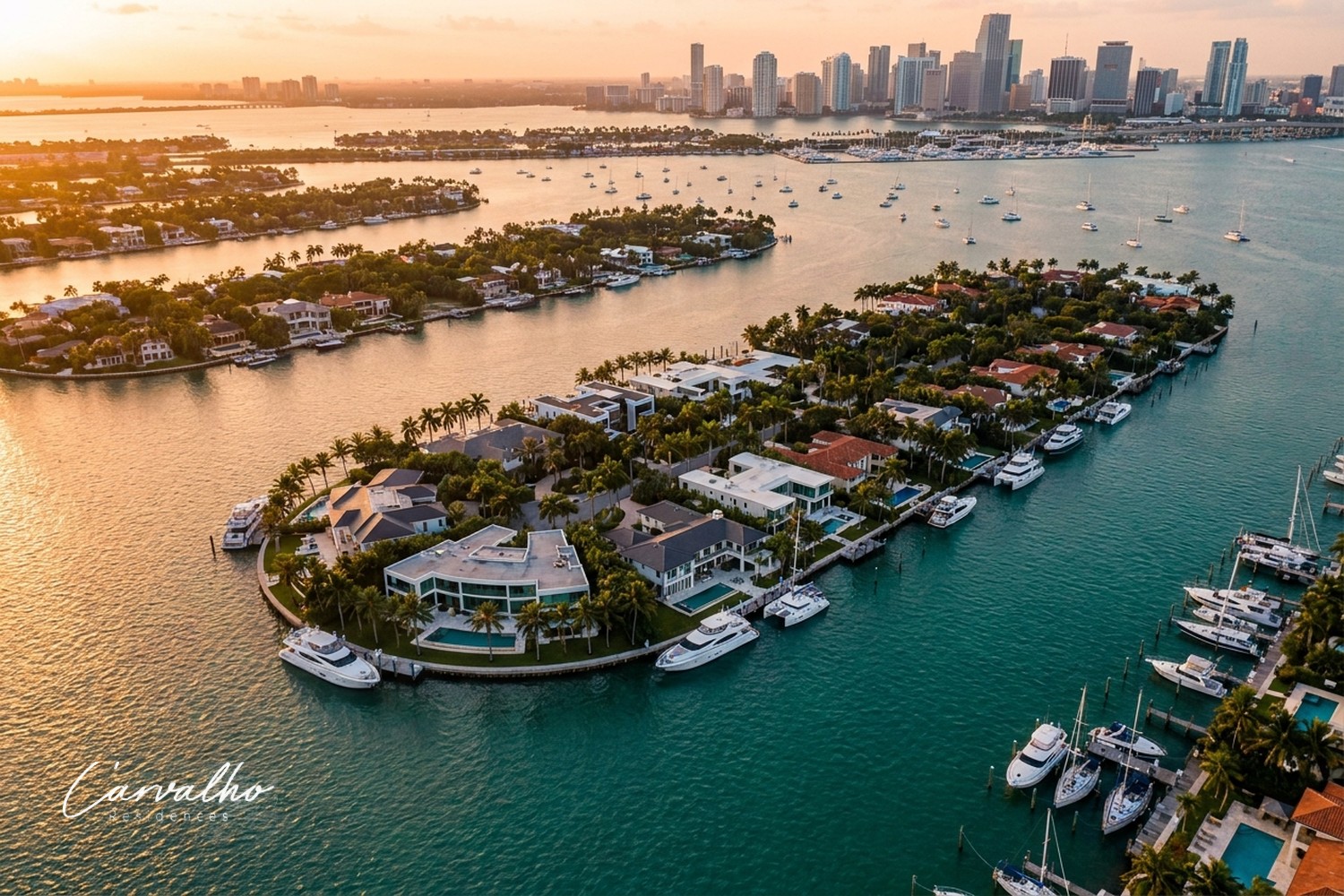

If you own a short-term rental in Miami Beach — or you've been eyeing one — the ground under the whole business shifted in the last year, and most owners still haven't caught up to it. The city's aggressive ban on short rentals, the one with the eye-watering fines, got struck down in court again in 2025. And the statewide bill that would have wiped out the city's rules entirely? Vetoed. So we've landed in a strange, contested middle: the rules are being fought over in real time, the enforcement math has changed, and the actual rental economics are quietly better than the headlines suggest.
I want to walk through what's actually true right now — not the Reddit version, not the "Airbnb is dead in Miami Beach" version — because the gap between perception and reality is exactly where owners either get burned or find an edge.
The legal story: two fights, and why they cancel out into uncertainty
Miami Beach has spent years trying to be the strictest short-term-rental city in Florida. Its ordinances prohibit rentals of less than six months and one day across single-family homes and a long list of multifamily zones — and it backed that up with fines that started at $20,000 and doubled with each repeat offense. That fine schedule is what keeps getting the city in trouble.
In August 2025, a Miami-Dade court struck the ban down again, on the same grounds courts have flagged before: the city's penalty scheme is in direct conflict with Florida Statute 162.09, which caps local code-enforcement fines at $1,000 per day for a first violation and $5,000 per day for repeats. A city can't invent a $20,000 penalty when the state says the ceiling is $1,000. The litigation is still live heading into 2026 — this isn't the final word — but the direction of travel is clear, and the intimidation factor of those giant fines is gone.
The other half of the story runs the opposite way. In 2024, the Legislature passed SB 280, which would have pulled short-term-rental regulation up to the state level and stripped cities like Miami Beach of much of their power to restrict rentals. If it had become law, the city's whole framework would have been in question. Instead, Governor DeSantis vetoed it on June 27, 2024, objecting to the new state red tape — and nothing has replaced it. So the old system stands.
💡 The nuance most owners miss: Florida's 2011 preemption law (F.S. 509.032) generally blocks cities from regulating how often or how long you can rent — unless the city's ordinance predates June 1, 2011. Miami Beach's rules are grandfathered in from before that date. That single fact is why Miami Beach can be dramatically stricter than almost anywhere else in Florida, and why the fight here is fought over fines and enforcement, not over whether the city can regulate at all.
What's actually legal right now — and where
Here's the part that gets lost in the noise: short-term renting in Miami Beach was never uniformly banned. It's a zoning map, not a citywide switch. Whether you can legally run a nightly rental comes down entirely to the district your parcel sits in.
Where it's generally allowed: the designated resort and mixed-use districts — the Entertainment District, North Beach Town Center, and areas zoned Commercial-Mixed Use (CMU), RM-2, and RM-3. If you own in one of these, a legal short-term rental is on the table.
Where it's effectively off-limits: single-family neighborhoods and the lower-density residential zones — SF, SD-B, and RM-1 — where the six-months-and-a-day minimum still governs. This is where the fines have historically landed.
The paperwork is non-negotiable: a legal Miami Beach STR needs a Business Tax Receipt and a Resort Tax account, and both numbers have to appear in every listing and ad. Miami Beach does not participate in Airbnb's automatic tax collection, so you're responsible for filing and remitting resort tax yourself. Skipping this is the easiest, most common way to turn a legal rental into a code case.
The court fights are about the penalties. The zoning map is not in dispute. So the smart move isn't to assume the whole thing is a free-for-all now — it's to confirm exactly what district your parcel falls in and rent accordingly.
The numbers: quieter than the drama, better than you'd think
Strip away the legal theater and look at what a Miami Beach short-term rental actually produces. The market is large — roughly 4,300 active listings — and the headline metrics land in a healthy range: depending on the data source, occupancy runs from the low-40s to about 51%, average daily rate sits around $366–$382, and typical listings generate somewhere in the neighborhood of $38,000 to $45,000 a year. Guests book about six weeks ahead, which gives an attentive owner real room to price dynamically.
Rate scales hard with size and quality. Studios average around $253 a night; five-bedroom homes command $1,800+. The top 25% of listings clear $423+ a night, and the top 10% pull $684 and up. The average Miami Beach nightly rate — about $371 — actually sits below the Florida state average of roughly $476, which tells you the market is broad and competitive rather than a handful of trophy listings skewing the picture.
And here's the signal I'd underline for anyone deciding whether to buy in: over the past year, supply grew about 28% — a big jump — and yet both revenue and nightly rates still trended up. When you add that much inventory and pricing power holds, it means traveler demand is absorbing the new supply rather than getting diluted by it. That's a fundamentally different market than one where rates are collapsing under a listing glut.
What I'd actually do with this, depending on who you are
If you already own a Miami Beach STR
Confirm your zoning district in writing and make sure your BTR and Resort Tax numbers are current and displayed on every listing. If you're in a legal district and compliant, the 2025 ruling is quietly good news for you — the enforcement threat that scared off competitors has been blunted, and your professionally run, fully-permitted listing competes against a thinner field of people who are afraid to operate. If you're in a gray-area zone, don't read the court rulings as permission; read them as a reason to get properly structured before the litigation resolves in a direction you can't predict.
If you're thinking about buying one
Buy the zoning, not the listing photos. A property advertised as an "Airbnb income producer" in an SF or RM-1 zone is selling you a fight, not a business. A comparable unit in the Entertainment District, North Beach Town Center, or an RM-2/RM-3 building is selling you a legal, financeable cash-flow asset — and given the rate and occupancy numbers above, that asset underwrites well right now. The premium you pay for the right zoning is the cheapest insurance in this whole category.
If you're an owner thinking about selling
A clean, legal short-term-rental history is a genuine selling point in this market — and, like the reserve story on a condo, most sellers can't credibly claim it. If your unit is in a permitted district with a documented BTR, resort-tax filings, and real revenue history, that package can command a premium from investors who don't want to guess. Package it, prove it, and price it as the income asset it is rather than as a plain residential resale.
What I actually think
Miami Beach has tried, for the better part of a decade, to zone and fine its way out of the short-term-rental era. The courts keep telling it that it can't do so with penalties the state never authorized, and the Legislature declined to hand it a cleaner tool. So we're left with a market that looks chaotic on the surface and is actually pretty legible underneath: a zoning map that tells you where you can operate, a paperwork checklist that tells you how, and a set of rental numbers that are holding up even as supply climbs.
The owners who lose in this environment are the ones who treat the legal noise as either a green light or a stop sign. The ones who win read the specifics — which district, which permits, which numbers — and act on the version of Miami Beach that's true today, not the one from the headlines two years ago. Get the zoning right and the rest of this is a well-behaved business.
Not sure whether a specific Miami Beach property can legally run as a short-term rental? Send me the address and I'll pull the zoning district, tell you whether nightly rentals are permitted there, what the BTR and resort-tax requirements look like, and what comparable legal listings in that pocket are actually earning right now.
👉 Message me on WhatsApp | 🏖️ Own an STR and thinking about selling? Ask me for a valuation that credits your rental history | ✉️ silvana@carvalhoresidences.com
Frequently Asked Questions
Are short-term rentals legal in Miami Beach in 2026?
It depends entirely on the zoning district. Short-term rentals (under six months and one day) are generally permitted in designated resort and mixed-use districts — such as the Entertainment District, North Beach Town Center, and areas zoned CMU, RM-2, and RM-3 — provided the owner holds a Business Tax Receipt and a Resort Tax account and displays both numbers in every listing. They remain restricted in single-family and lower-density residential zones (SF, SD-B, RM-1), where a six-month-and-one-day minimum applies. Always confirm your specific parcel's zoning before renting.
Did a court really strike down Miami Beach's short-term rental ban?
Courts have repeatedly found Miami Beach's short-term-rental fine scheme unlawful, most recently in a 2025 Miami-Dade ruling. The problem is the penalties: the city imposed fines starting at $20,000 and doubling, while Florida Statute 162.09 caps local code-enforcement fines at $1,000 per day for a first violation and $5,000 per day for repeats. The litigation is ongoing, so this isn't a final resolution — but it has removed much of the intimidation factor behind the city's enforcement.
What happened to Florida's statewide short-term rental law (SB 280)?
SB 280 would have centralized short-term-rental regulation at the state level and limited cities' ability to restrict rentals. Governor DeSantis vetoed it on June 27, 2024, so it never took effect. As a result, Florida's older framework continues into 2026: the 2011 state preemption generally bars cities from regulating rental duration or frequency, but ordinances adopted before June 1, 2011 — including Miami Beach's — are grandfathered and remain enforceable in principle.
How much can a Miami Beach short-term rental earn?
Depending on the data source, Miami Beach short-term rentals average roughly 42%–51% occupancy, an average daily rate around $366–$382, and annual revenue in the range of about $38,000–$45,000. Rates scale sharply with size: studios average around $253 a night, while five-bedroom homes exceed $1,800. The top quartile of listings clears $423+ per night. These figures blend legal and non-permitted listings, so a compliant listing in a strong district can perform above the citywide average.
Do I have to collect resort tax myself in Miami Beach?
Yes. Unlike some Florida jurisdictions, Miami Beach does not participate in Airbnb's automatic tax remittance program. Legal operators must register for a City of Miami Beach Resort Tax account, collect the tax from guests, and remit it themselves, in addition to holding a Business Tax Receipt. Both the Business Tax Receipt number and the Resort Tax certificate number must be displayed in every advertisement and listing.
Short-term-rental law in Miami Beach is being actively litigated and the numbers move quarter to quarter — if you're reading this later, reach out and I'll pull the current rules, the status of the enforcement cases, and parcel-specific guidance for your situation. 🔑
Sources: City of Miami Beach — Vacation / Short-Term Rentals program and permitted-district requirements (Business Tax Receipt + Resort Tax registration, listing-display rules); Florida Statutes ss. 162.09 (code-enforcement fine caps: $1,000/day first violation, $5,000/day repeat) and 509.032(7) (2011 state preemption of duration/frequency regulation, pre-June 1, 2011 grandfather clause); 2025 Miami-Dade County ruling striking down Miami Beach's short-term-rental ordinance on fine-conflict grounds (Haber Law; National Law Review / Mondaq coverage); Florida SB 280 (2024) and Governor DeSantis veto, June 27, 2024; AirDNA Miami Beach STR market overview 2026; Rabbu and AirROI Miami Beach data 2026. Legal details are summarized for general information and are not legal advice.