Everyone in Miami has been watching the wrong calendar. All year the condo conversation has been about mortgage rates and the two-speed market — houses hot, condos soft. But the date that's actually going to reprice a huge slice of the older condo market isn't a Fed meeting. It's December 31, 2026. And as of this week, it's about five months away.
That's the hard deadline for Florida's post-Surfside structural reserve studies. By the end of this year, aging condo buildings across Miami-Dade have to show their cards: what needs fixing, what it costs, and how they're going to pay for it. For four years that reckoning has been abstract — a law with a distant due date. It's not distant anymore. And the buildings that clear it will look very different, on paper and in price, from the ones still scrambling in December.
Here's what almost no one is pricing in yet: this deadline isn't only bad news. Alongside it, the state quietly loosened the rules that made the whole thing so brutal, and Miami-Dade just reopened a fund to help owners absorb the hit. If you know where to look, the next five months are one of the clearer setups the condo market has handed us in a while.
What actually comes due on December 31
Two obligations converge at year-end for older buildings. The milestone inspection — a structural sign-off required once a building hits 30 years — and the Structural Integrity Reserve Study (SIRS), which prices out the roof, concrete, waterproofing, electrical, and the other big-ticket components and says how much cash the association must set aside for them.
The SIRS was originally due December 31, 2025. Last year's House Bill 913 pushed it a full year to December 31, 2026 — but that's the wall. A required SIRS can't be completed after that date. Then, starting with budgets adopted for 2027, associations that had been waiving or underfunding reserves generally have to fully fund the SIRS components — no more waivers, no borrowing from those reserves for other things.
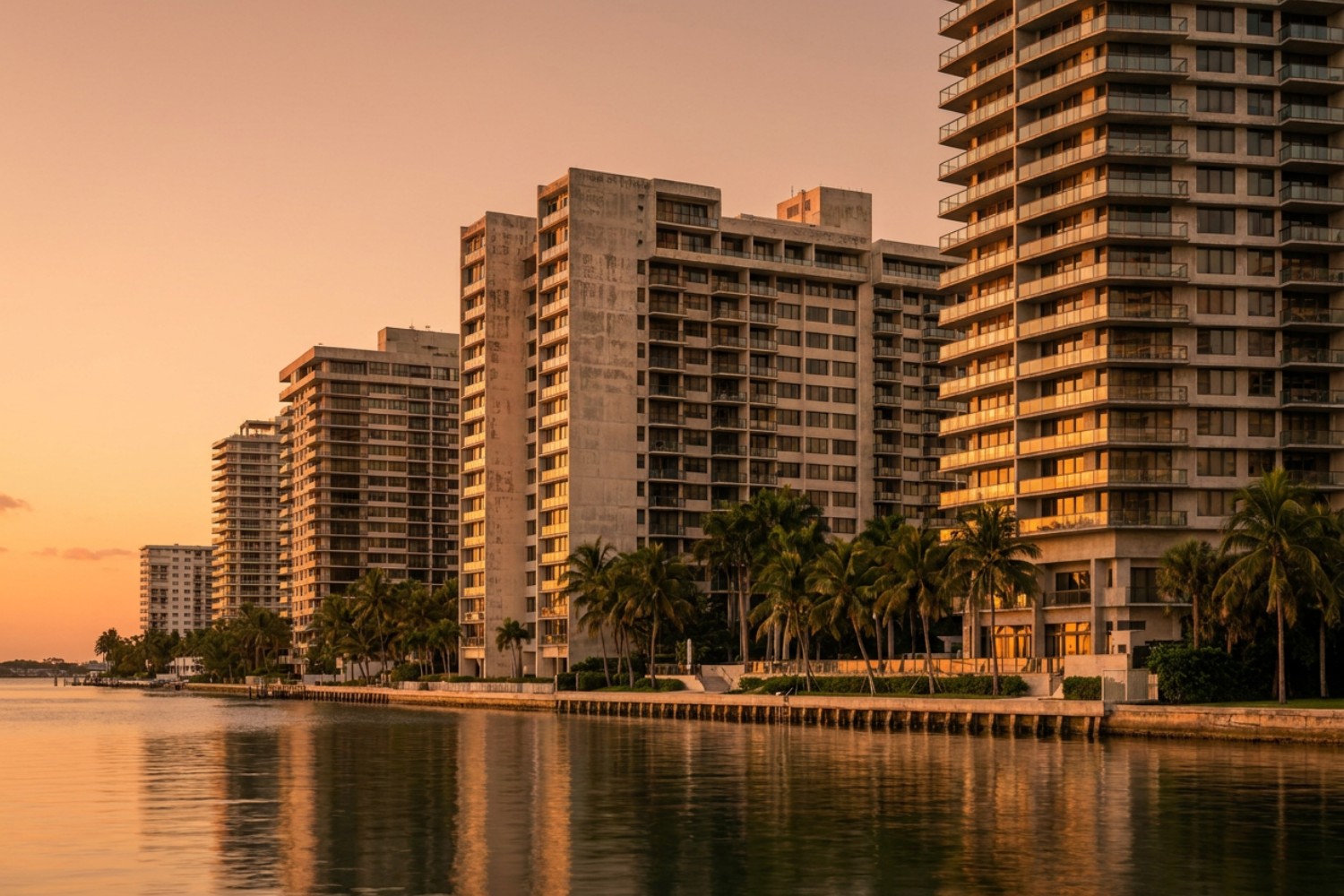
Translate that out of legalese: between now and December, every aging Miami building is being forced to put a real number on its deferred maintenance. Some of those numbers are going to be ugly. The 1975-to-1995 towers that make up so much of Miami's condo stock are already issuing special assessments of $30,000 to $75,000 a unit for combined roof, concrete and waterproofing work — and in some luxury buildings, north of $100,000. That's the mechanism that has already dropped values in older buildings by roughly 19%, and as much as 20-40% in the worst cases.
The part the headlines skip: the rules just got easier, not harder
The doom framing stops here, because HB 913 didn't just move the date — it added real relief that changes the math for well-run buildings:
The reserve threshold jumped from $10,000 to $25,000, now indexed to inflation. Components that cost less than that no longer require mandatory reserve funding — which quietly takes a pile of small line items off association budgets.
Boards can now pool reserves for structural components without a unit-owner vote. That means cash can flow to the most urgent repair instead of sitting frozen in a dozen separate line-item accounts. It's a cash-flow lifeline for a building trying to get healthy.
Associations can use loans, lines of credit, or phased assessments — with owner approval — to meet reserve requirements, instead of demanding the entire amount in cash up front.
Buildings mid-repair get breathing room. If a milestone inspection turns up work that's actively being done, an association can pause or reduce reserve funding for up to two budget years with member approval.
And this is the local piece I'd underline: Miami-Dade County reopened its Condominium Special Assessment Loan Program on June 1, 2026, with roughly $15 million to help owners who get hit with a large assessment they can't pay in one shot. It's not a bailout for broken buildings — but it's a real tool that keeps individual owners from being forced into a distress sale just because their board voted a big number. Fewer forced sellers means fewer fire-sale comps dragging down the whole building.
💡 The insight most buyers miss: December 31 isn't a cliff the whole condo market falls off — it's a sorting date. It forces every older building to become knowable. After it, a building either has a completed inspection, a funded (or credibly financed) reserve plan, and a clean story — or it doesn't. The discount is largest right now, in the fog before the deadline, when buyers can't tell the sound buildings from the shaky ones. The moment a good building proves it's sound, its discount has no reason to exist.
If you're an investor: you're being paid to do the homework
The condo market is a 12.3-month buyer's market with a median around $431,000, down about 3% year over year, and units now sitting roughly 85 days before going under contract — up from 68 a year ago. That softness is not evenly distributed. It's concentrated in exactly the older, reserve-uncertain buildings this deadline targets. Which is where the opportunity is.
Buy the paperwork problem, not the concrete problem. A structurally sound building that simply hasn't finished its SIRS yet is priced today as if it were a disaster. Pull the milestone inspection, the reserve study (or its draft), the funding plan, and the last three years of board minutes. A building racing the clock with a credible plan is mispriced. One with genuine structural rot is a trap. The documents — not the listing — tell you which.
The deadline is your catalyst. Most price dislocations need a reason to close. This one has a literal date on the calendar. A sound building that goes from "reserves unknown" to "inspection passed, reserves funded" between now and January is a repricing event you can see coming.
Watch for financeability flipping. More than 1,400 Florida condo buildings are on Fannie Mae's "unavailable" list, which forces buyers into cash and holds prices down. A building that completes its study and funds its reserves can start climbing back toward warrantable — and when it does, its buyer pool multiplies. You want to own before that switch flips, not after.
Use the county loan program as a screen. A board that's proactively lining up financing — the Miami-Dade program, a bank line of credit, phased assessments — is a board that's managing the deadline instead of being managed by it. That competence is worth paying up for.
If you're a seller: your reserve story is now part of your list price
If your condo has been sitting while houses in the same ZIP code go under contract in under two months, the reserve question is very likely why. Buyers and their lenders are pricing in uncertainty about your building — and the deadline is about to remove your excuse for leaving that uncertainty unanswered.
Get your building's status in writing before you list. Is the milestone inspection done? Is the SIRS complete? Is there a funding plan, and is it cash, a loan, or a phased assessment? These facts now set your realistic price more than any comp does.
If your building has cleared it, that is your headline — and it's rare. "Milestone passed, SIRS complete, reserves funded, no pending assessment" is worth real money in this market precisely because most sellers can't say it. Lead with it. Prove it. Don't bury it on page four of the disclosures.
If a big assessment is coming, get ahead of it, don't hide it. Buyers punish surprises far more than known numbers. A disclosed $40,000 assessment with a clear scope and a county-backed payment option scares people far less than a vague "the building might do something next year." And point buyers to the Miami-Dade loan program — it can be the difference between an offer and a walk-away.
Timing matters. Selling into the five months of pre-deadline fog means competing on price with every other uncertain building. Selling with a clean, completed reserve story — even a few weeks after the deadline — can put you in a much thinner, much more valuable category.
What I actually think
The story Miami has told itself about condos is that the post-Surfside laws broke the market. That was half right. What those laws really did was force a delayed bill into the open — decades of deferred maintenance that everyone had been politely ignoring. Painful, yes. But a market that knows its true costs is a healthier market than one pretending they don't exist.
December 31 is the day a lot of that pretending ends. And the state and the county have both, in the last year, handed buildings real tools to survive the reckoning instead of being destroyed by it — a higher reserve threshold, reserve pooling, financing flexibility, and a reopened assessment loan fund. The buildings with competent boards are going to use those tools and come out the other side clean and financeable. The buildings that spent four years hoping the deadline would move again are going to be exposed.
That's the whole game for the next five months: tell the difference between a building that's doing the work and one that's running out the clock. Get that call right, and today's fog is your discount. Get it wrong, and you've bought someone else's assessment. The deadline is going to make that distinction impossible to hide — which means the edge belongs to whoever reads the documents first.
Want to know exactly where a specific building stands before December 31? Send me the building or the address and I'll pull the picture: milestone and SIRS status, reserve funding plan, any pending or looming assessment, financeability, and what the real buyer pool looks like today versus after the deadline. 👉 Message me on WhatsApp | 🏷️ Selling a condo? Ask me for a free valuation that accounts for your building's reserve and inspection status | ✉️ silvana@carvalhoresidences.com
Frequently Asked Questions
What is the December 31, 2026 condo deadline in Florida?
It's the hard cutoff for the Structural Integrity Reserve Study (SIRS) required of many aging Florida condo buildings. Under House Bill 913, a required SIRS cannot be completed after December 31, 2026. Buildings that hit 30 years old also generally face a milestone structural inspection around the same time. Starting with budgets adopted for 2027, affected associations are generally expected to fully fund the SIRS reserve components, with waivers eliminated.
Did HB 913 make Florida's condo reserve rules easier or harder?
Both, but mostly easier for well-run buildings. HB 913 pushed the SIRS deadline out a full year (to December 31, 2026), raised the mandatory reserve threshold from $10,000 to $25,000 (now inflation-indexed), let boards pool reserves for structural components without a unit-owner vote, and allowed associations to use loans, lines of credit, or phased special assessments to meet reserve requirements. It also gives buildings mid-repair a temporary funding pause. The underlying safety requirements remain, but the compliance path is more flexible.
What is the Miami-Dade Condominium Special Assessment Loan Program?
It's a county program, reopened on June 1, 2026 with roughly $15 million in funding, designed to help condo owners who are hit with a large special assessment they can't pay in a single lump sum. It doesn't fix a broken building, but it can keep individual owners from being forced into a distress sale — which helps stabilize prices in buildings working through required repairs. If your building votes a large assessment, ask your board and your agent whether the program applies.
How much are Miami condo special assessments running in 2026?
For older towers built roughly between 1975 and 1995, combined roof, concrete, and waterproofing projects are commonly generating assessments of $30,000 to $75,000 per unit, and in some luxury buildings north of $100,000. These assessments — combined with higher insurance and HOA costs and financing restrictions — have pushed values in the oldest buildings down by roughly 19%, and as much as 20-40% in the hardest-hit cases.
Is it a good time to buy an older Miami condo before the deadline?
It can be, if you do the due diligence. The discount is largest right now, in the uncertainty before December 31, and it's concentrated in older, reserve-uncertain buildings. A structurally sound building that simply hasn't finished its study yet may be mispriced for a reason that's about to be resolved. Review the milestone inspection, the SIRS or its draft, the funding plan, board minutes, and any pending assessment or litigation before making an offer — and confirm the building's financing status with a good local lender.
Condo law, assessment figures, and market data are moving quickly heading into the December deadline — if you're reading this later, reach out and I'll pull the current rules and building-specific status for your situation. 🔑