
Most owners I meet have a number in their head. It is the price they want. Far fewer have the number that matters, which is the check they walk away with after the payoff, the commission, the taxes and the line items nobody mentioned in the listing presentation.
The gap between those two numbers is where sellers make bad decisions. They reject a good offer because it is "only" a certain price, or they hold out for a price that nets the same as an offer they already passed on. So before we talk list price, I build the net sheet first and price backwards from it. Here is how it works in Miami-Dade, including one line that surprises almost every condo owner.
The net sheet, line by line
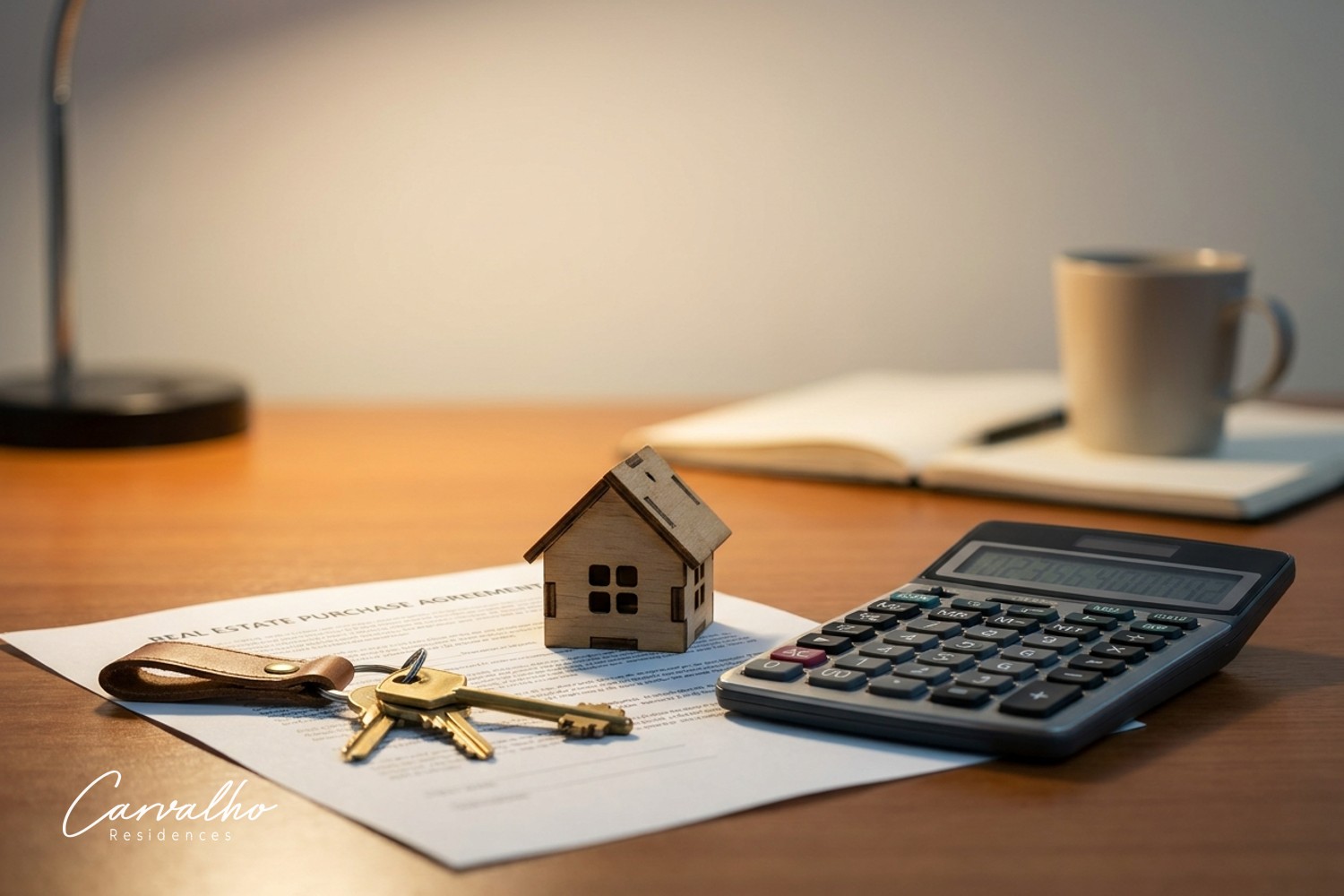
Here is an illustrative condo sale. The sale price, payoff, commission rate and miscellaneous closing figure are my assumptions for the example, not market data. The doc stamp line uses the Miami-Dade rate discussed below. The arithmetic is mine.
Sale price (condo): $1,200,000 (Assumption)
Mortgage payoff: ($500,000) (Assumption; request an official payoff letter)
Brokerage commission at 5%: ($60,000) (Fully negotiable; 5% is an assumption)
Deed doc stamps, Miami-Dade, non-single-family (1.05%): ($12,600) ($0.60 + $0.45 surtax per $100)
Title, estoppel, recording, prorations, misc.: ($5,000) (Placeholder; varies widely)
Net before income tax: $622,400 ($1,200,000 minus $577,600)
Notice that the commission is the biggest cost but not the only one worth negotiating around. Roughly $77,600 left the table before any tax conversation, which is 6.5% of the sale price in this example. Your number will differ, and that is exactly why I run it on your property rather than quote a rule of thumb.
The line most Beach condo owners don't see coming: the surtax
Florida's documentary stamp tax on a deed is $0.70 per $100 in most counties. Miami-Dade works differently. According to published closing-cost guides, a single-family residence is taxed at $0.60 per $100, while other property types, which includes condos, carry an added $0.45 per $100 surtax, bringing the total to $1.05 per $100. The Florida Department of Revenue confirms the tax is imposed under Chapter 201 of the Florida Statutes and collected by the clerk when the deed is recorded. Under the standard Florida Realtors/Florida Bar contract, the seller typically pays the deed stamps, though anything is negotiable.
What does that do in dollars? Take a $2,500,000 sale. As a single-family home, deed stamps are $2,500,000 × 0.60% = $15,000. If the same price were a condo, they would be $2,500,000 × 1.05% = $26,250. That is an $11,250 difference on identical sale prices, and it is my arithmetic from the published rates. Confirm the current rate and any exemption with your title company before you rely on it.
💡 What I tell owners: if two offers are within a rounding error of each other, compare their net, not their headline. A $15,000 gap in price can disappear once you add credits, repair requests and who is paying what.
Taxes: where the real money moves
Florida has no state income tax, which is a real advantage for sellers here. Federal tax is a different story, and it depends entirely on who you are.
If it is your primary residence
Under federal law, you can generally exclude up to $250,000 of gain ($500,000 if married filing jointly) if you owned and lived in the home for at least two of the last five years. For many Beach owners with long ownership and large gains, the excluded amount does not cover everything, so I want your basis (purchase price plus qualifying improvements) before we set expectations.
If it is an investment or second home
There is no exclusion. Continuing the example above, say your adjusted basis is $800,000. Gain would be the $1,200,000 sale price less $77,600 in selling costs less $800,000 basis, or $322,400. If you are in the top long-term capital gains bracket (20%) and subject to the 3.8% net investment income tax, that is 23.8% of $322,400, or roughly $76,700, before any depreciation recapture on a rental, which can be taxed at up to 25%. That is an illustration, not your tax bill. Your CPA runs the real one. A 1031 exchange can defer all of it, and I covered that playbook earlier this summer.
If you are a foreign seller
FIRPTA generally requires the buyer to withhold a percentage of the sale price at closing, commonly 15% for a sale over $1 million, with reduced rates in some situations. That withholding is based on the price, not your profit, so on a $1,200,000 sale it can be $180,000 held back even if your actual tax is lower. You can apply to the IRS for a withholding certificate to reduce it, but you need to start before closing. If this is you, it is the single most important planning step.
Condo-specific items to confirm early
If you are selling a condo, request your estoppel certificate early. It tells the buyer what you owe the association and any assessments pending or approved. Florida law limits what an association can charge for it, but delays can hold up a closing. Also ask whether the building has any special assessments that will be paid by the seller at closing, because buyers will ask and lenders will check.
What this means for you in Miami Beach
Price is a goal. Net is a decision. If you are thinking of selling, the right first step is not a list price. It is an honest net sheet with your payoff, your basis, your building's fees and the doc stamp rate for your property type, so you can see what each offer is really worth and decide whether now is your time.
Thinking of selling in Miami Beach? Curious what your property would sell for today, and what you would actually net? I will run you a real number, based on closed comparables and your own payoff and tax situation. No pressure, no pitch.
Looking to buy or invest on the Beach? Let's find your place. I will walk you through your own costs on the other side of the table too.
👉 Message me on WhatsApp | ✉️ silvana@carvalhoresidences.com | 📞 +1 (786) 767-0131
Frequently asked questions
How much are doc stamps when selling a condo in Miami-Dade?
Published closing-cost guides put deed documentary stamps in Miami-Dade at $0.60 per $100 for single-family homes and $1.05 per $100 for other property types, including condos, because of a $0.45 per $100 surtax. On a $1,200,000 condo that is $12,600. Confirm the current rate with your title company.
Who pays doc stamps on a deed in Florida?
Under the standard Florida Realtors/Florida Bar contract, the seller typically pays the documentary stamps on the deed, but the contract can be negotiated differently.
Do I owe capital gains tax when I sell my Miami Beach home?
Florida has no state income tax. For federal tax, a primary residence may qualify for an exclusion of up to $250,000 of gain ($500,000 for married couples filing jointly) if you meet the ownership and use tests. Investment and second homes do not. Talk to your CPA about your situation.
What is FIRPTA withholding for foreign sellers?
FIRPTA generally requires the buyer to withhold a percentage of the sale price when a foreign person sells U.S. real estate, commonly 15% for sales over $1 million. A seller can apply for a withholding certificate to reduce the amount, ideally before closing.
Sources: Barnes Walker, "Florida Transfer Tax Rates at a Glance"; DeedClaim, "Florida Documentary Stamp Taxes and Recording Costs for Deeds"; Florida Department of Revenue, Documentary Stamp Tax page (Chapter 201, Florida Statutes). Federal tax figures reflect general IRS rules (home sale exclusion, long-term capital gains, net investment income tax, FIRPTA) and can change. All dollar examples are illustrative, with the assumptions stated, and the arithmetic is mine. This is general information, not legal, tax or investment advice. Confirm with your title company, attorney and CPA.