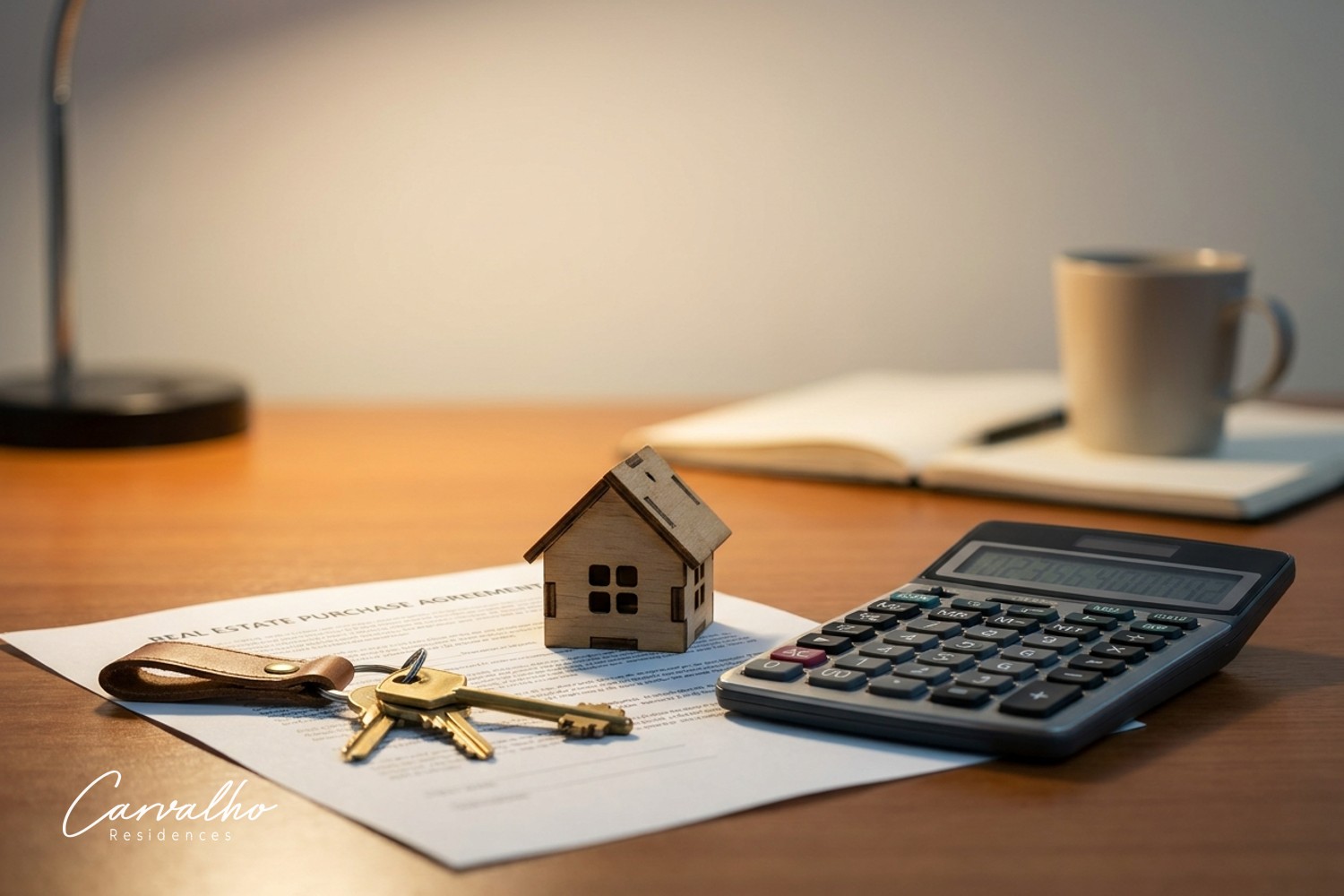
Today, let's talk about the part of buying a home that catches people off guard more than any other — closing costs. You've saved for the down payment, you've found the place, and then comes that closing statement with a list of fees you've never heard of. Let me demystify it, because once you understand where the money goes, none of it feels scary — and you can budget like a pro.
First, the big picture
Across Florida, buyers generally budget about 2%–5% of the purchase price in closing costs, on top of the down payment. But Miami has its own patterns, and what you pay depends a lot on how you're buying:
Resale, paying cash: roughly 1%–1.5% of the price
Resale, with a mortgage: roughly 1.5%–2.5% of the price
Pre-construction / developer: roughly 2.5%–3.5% of the price
Financing adds costs (lender fees and mortgage taxes), and new construction usually carries developer-specific fees — which is why those numbers climb as you move down the list.
The line items, explained in plain English
Title insurance
This protects you (and your lender) against hidden claims on the property's title. In Florida it's priced on a set scale: roughly $5.75 per $1,000 on the first $100,000, $5.00 per $1,000 from $100,000 to $1 million, and $2.50 per $1,000 above $1 million. Here's the Miami twist worth knowing: in Miami-Dade County, the buyer customarily pays for title insurance — the opposite of how it works in much of the rest of Florida.
Documentary stamp tax (the "doc stamps")
Florida's tax on transferring the deed. In Miami-Dade it's $0.60 per $100 of the purchase price (plus a small surtax on properties that aren't single-family).
If you're financing, add these
Doc stamps on the note: $0.35 per $100 of the loan amount.
Intangible tax: $2.00 per $1,000 of the loan amount.
Lender fees: generally 0.5%–1.5% of the loan, for origination, underwriting, and processing.
The smaller (but real) costs
Recording fees for the deed and mortgage
Property tax and insurance prorations / escrow setup
Survey, appraisal, and an HOA or condo estoppel fee where applicable
💡 A quick example: On a $450,000 home, closing costs often land somewhere around $9,000–$18,000, depending on whether you're financing, the property type, and your insurance and tax escrows. Knowing the range early means no surprises at the table.
Closing costs are negotiable more often than people think
Here's something many buyers don't realize: several of these costs have room to move. Depending on the market and the deal, we can sometimes negotiate seller concessions toward your closing costs, shop lenders to compare fee structures, and time the closing to reduce certain prorations. On new construction, there are often developer credits worth asking about. This is exactly the kind of money I work to save my clients — it's real, and it adds up.
A special note for international buyers
If you're buying from abroad, your closing looks a little different — there can be extra considerations around financing, entity structuring (some buyers purchase through an LLC), and tax withholding rules. It's very manageable with the right team, and it's something I guide international clients through all the time.
So unterstütze ich Sie
Before you ever write an offer, I'll give you a clear, personalized estimate of your closing costs for the specific property and purchase type — no vague "two to five percent." You'll know your true cash-to-close, we'll look for every place to trim it, and you'll walk into closing day calm and confident.
Want a real closing-cost estimate for a property you're eyeing? Send it over and I'll break down your numbers — and where we might save. 👉 Message me on WhatsApp | Ask me for my branded Florida closing-cost guide | ✉️ silvana@carvalhoresidences.com
Häufig gestellte Fragen
How much are closing costs for a buyer in Miami?
Plan for roughly 1%–1.5% on a resale cash purchase, 1.5%–2.5% with a mortgage, and 2.5%–3.5% on pre-construction — generally landing in the 2%–5% range used across Florida.
Who pays for title insurance in Miami-Dade?
In Miami-Dade County the buyer customarily pays for title insurance, which differs from much of the rest of Florida where the seller often covers it.
What is the documentary stamp tax?
It's Florida's tax on transferring the deed — $0.60 per $100 of the purchase price in Miami-Dade, plus a small surtax on non-single-family properties. Financed buyers also pay doc stamps and intangible tax on the loan.
Are closing costs included in my mortgage?
Generally no — they're typically paid at closing in addition to your down payment, though seller concessions or lender credits can sometimes offset them.
Can closing costs be negotiated?
Often yes. Seller concessions, lender comparison, and developer credits on new construction can all reduce what you actually pay.
Tax rates and fees can change, so if you're reading this later, reach out for a current estimate. 🔑